
star side intro
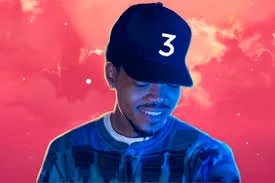
Coloring Book Mixtape by Chance the Rapper ‧ 2016 cover art
Chance the Rapper has been here for a long time as an artist. I look up to him and the art he produces. He has been on a hiatus since 2019, producing his own music. He had a couple of appearances in Justin Bieber's "Holy," but that's about it. He starts this album out with "Star Side." It's his intro, telling people he will be back and that he is here. This dynamic is so precious to me because I grew up trying to understand his struggles. Yes, his old music from 2016 is still playing in my Spotify playlist, but we want to dissect the imagery he puts into his music. He has something that we all experience: being lost and finding your voice.
Let's now take a look at "Star Side." In the intro, we get this upbeat Chi-town vibe, heavy on the 808s. He starts his lyrics with: "Surprise, it's the boy who lived. It's the West Chatham Santa with some toys to give. A .38 Special I call Noisy Cricket." He talks about his hometown, which is an homage to him and how far he has come. He wants you to go down memory lane and see how hard he is going in this album—please keep this in mind. He wants to have fun with this album: no pressure, no pain, no gain. He explains this heavily in the next set of lyrics; he is here to change his whole sound: "I got a chain on now, call Roy G. Biv. It's the new New Edition like Poison, Biv, Bell, DeVoe. It's time to make that noise again (Perfect). Lauryn Hill said she'd see me on The Voice again. But this the end of the road like Boyz II Men. You better use your pen, baby, use your heart, child. Where's your viewpoint?"
This is a perfect example of him just goofing around. His lyricism has depth and shows his knowledge, and he wants to take the listener on a journey.
You better use your pen, baby, use your heart, child. Where's your viewpoint? Where's your art style? Sometimes a teardrop can make your heart smile. Looking for a sign, and He sends a star shower. Fresh off surviving the coup d'état, the music stopped. You just might lose your spot. No fairytale endings if you lose the plot. It's written in the notebook if you forgot. It's a love letter.
This is a love letter. This one gets me every time because it's about bringing fun before the seriousness he's about to get into. Chance, in the next set, is about to talk about the idea of being in the “slow class.” American society has had an issue with American Black males, often putting them into slower classes because students learn differently. Reading/Math Proficiency: About 84% of Black fourth-graders did not read at a proficient level in 2022, and 91% of Black eighth-graders tested below proficiency in math (https://www.nationsreportcard.gov/). What Chance is about to say is true, and I am one of those who have struggled with reading and math. The trust in school systems—of you being useful in a class that isn't good—is difficult. There were many times when my mom would hear that I wasn't going to make it, so these next lines hit harder than I can even remember. Chance goes on to say this:
I used to hate math, used to love letters (Yeah, ho) They had me in the class with the dumb niggas (Yeah, ho) This nigga come to class with an umbrella (Yeah, ho) Ditch school, day walker, I'm a sun dweller (Yeah, ho) Until I met a brother Mike, he said, "Young fella (Yeah, ho) Everybody dies, some write poems" (Yeah, ho) So, I raised my right arm and I said, "Right on" Put my name on that don't-give-no-fuck list America's own Niggas You Can't Trust List I got a SIG Sauer called MC Hammer I got a chain on now called You Can't Touch This I said I gotta figure out a—huh?
Chance has a strong influence from postcolonial writing styles here. He uses the Henry Louis Gates Jr. approach, turning something derogatory into a positive instead of a negative. He shows us that we can all be what we want to be. In this approach, Henry Louis Gates says this: Gates begins the article by discussing the term “signifying,” which is familiar to literary theorists since Saussure; we know “signification” as the relationship between signifier and signified, which creates a sign. Gates points out, however, that the term has an entirely different meaning and history in African American cultural usage.
This is an example of signifying, as explained in one of Gates's articles. Gates shows the framework for most Black artists and encourages us to take the slang that was once used as a threat and turn it into something positive. When we look back at Chance the Rapper, he approaches this in his lyrics: "They had me in the class with the dumb niggas (Yeah, ho) This nigga come to class with an umbrella (Yeah, ho) Ditch school, day walker, I'm a sun dweller (Yeah, ho) Until I met a brother Mike, he said, 'Young fella (Yeah, ho) Everybody dies, some write poems' (Yeah, ho) So, I raised my right arm and I said, 'Right on.'" This signifies the dyslexic experience and the way he would act in class. There is more to come when you look at him and reflect on his idea of being labeled as slow. He goes on to clarify that, in that moment, he didn't care, showing that he can be better than anyone. The best part is the way he ends the song: "Put my name on that don't-give-no-fuck list. America's own Niggas You Can't Trust List. I got a SIG Sauer called MC Hammer. I got a chain on now called You Can't Touch This. I said I gotta figure out a—huh? Gotta figure out a way to get this money by tomorrow. If you know me, it ain't funny anymore. If you owe me, ain't no running anymore."
Throughout this whole song, Chance shows us that he isn't running from being himself. He is here to stay and to push the idea of what he has been doing. Chance doesn't want another failed album, and he wants to show that he is here to stay for as long as possible.
